Chronicles of a Hospice Nurse: Life Lessons Learned the Hard Way

How you can be the richest person in the world

I am an artist that combines human unfulfilled dreams, last painful regrets, and agonizing pleadings into the greatest masterpiece this world had ever seen. – Olya Aman

I am a hospice nurse. I witness the end-of-life every day. I’m an expert in emotional and physical pain elimination. Physical pain is taken care of with the help of drugs; emotional—with the help of letters I offer my patients to write. I come home after work and reveal my daily impressions to my diary. It helps me understand the meaning of life, and our place in it.

Life most foul

Martin, a patient on a deathbed, is very weak. He has only a day or two left. Enough time to respond to a question, “Martin, you are dying. Who do you care about? What message do you want to send to those whom you love? This is a pen and a paper. I promise to deliver your letter.”

Martin laughs convulsively, shaking all over. Tears are streaming down his cheeks. All that emotion is tearing him apart. I can see the pain crippling down his throat.

A skill of commanding love is the only and the biggest blessing in life. To gain it be a Herculean task for me, much harder than to become a millionaire many times over. – Olya Aman

It is a beautiful experience: a handsome elderly man, with thin lips that forgot how to smile, and grey eyes that didn’t remember how to show pity or compassion. This person is transformed into the naïve boy he once was. The boy that used to believe in love and remember how that feeling could rejuvenate and heal. The boy that was generous in a way where he did not want it returned. He used to let himself forget what he had done for others, and because of that he never missed love.

Instruments of self-destruction

Martin responds with emotion, “Nothing. Listen! Nothing came easy for me in this life. Everything I had I needed to fight for. Gnaw out like a mad dog, breaking the teeth and trying to chew through all obstacles on my way — human or material. I didn’t care. And you know what? I buried my claws deeper in the human flesh rather than other things and I enjoyed it.”

Martin is overtaken by his memories. They haunted him for a long time and now he lets them out, freeing his mind and soul from their oppressing presence. He continues with passion, “But… Ha… everything I thought worth fighting for was irrelevant. The mere fog that is fading away at the sight of a brighter ray of the sun, running in fear of nonexistence. It is all… the houses I had, the cars I cared so much about, the jewels I traded for the pleasure of possessing another beautiful face, sensual body, and empty eyes — all of it was nothingness and left me when I went broke.”

There were many wars where Martin was marching with the flag of success, recognition, and money. Those were of no true importance. Nothing was left. An emotional lack was reining in his life. The understanding of this truth is torturing and rejuvenating at the same time. His following words prove it:

“Now I know, a skill of commanding love is the only and the biggest blessing in life. To gain it proved to be a Herculean task for me, much harder than to become a millionaire many times over. I had this skill when I was a kid. I lost it when I put money first on my scale of priorities.”

A moment of meaningful silence

Martin sobs, hiding his face in his hands. A moment of meaningful silence. I love this shared minute of wisdom. I never interfere. I let him experience this ocean of new feelings, wave after wave until his lungs can take this emotional fragrance and inhale it greedily, viciously.

Martin continues to open his heart to me and to himself, “I’ve lost everybody who cared about me. Everybody who I thought would be ever-present in my life by some weird universal law and with no effort on my side. Am I the only one who makes such a mistake? I traded Alive for Soulless. They needed me, my love, my attention, and my time. The most valuable things I never shared with my family. Then I thought it was too late.”

Martin was a traveler in a desert. His life was a sandy plain with mirages of abundance and each of them turned out to be another sandstorm that swept away one by one everything real in his life.

They say tears are not words, and words are not tears. Now, sitting by Martin’s bedside, I can tell that tears and words are inseparable. Every word he utters is a drop of regret, love, passion, and compassion, “No. The truth is — I was too proud to ask for forgiveness, too arrogant to make the first move. And now I am alone. They would have been beside me right now if I had been with and for them before. No one will miss me. No one! I have nothing to write on this paper because there is no one you can deliver it to.”

Martin dictates. I write. Now there are no tears to accompany his words. He was obsessed with such a common sickness of possession. He thought luxury could substitute for the warmth of loving humans. Every new object he obtained was draining his soul, making his heart numb — tough like a stone. He lost connection with his wife and son many years ago. I addressed his letter to his now grown-up son.

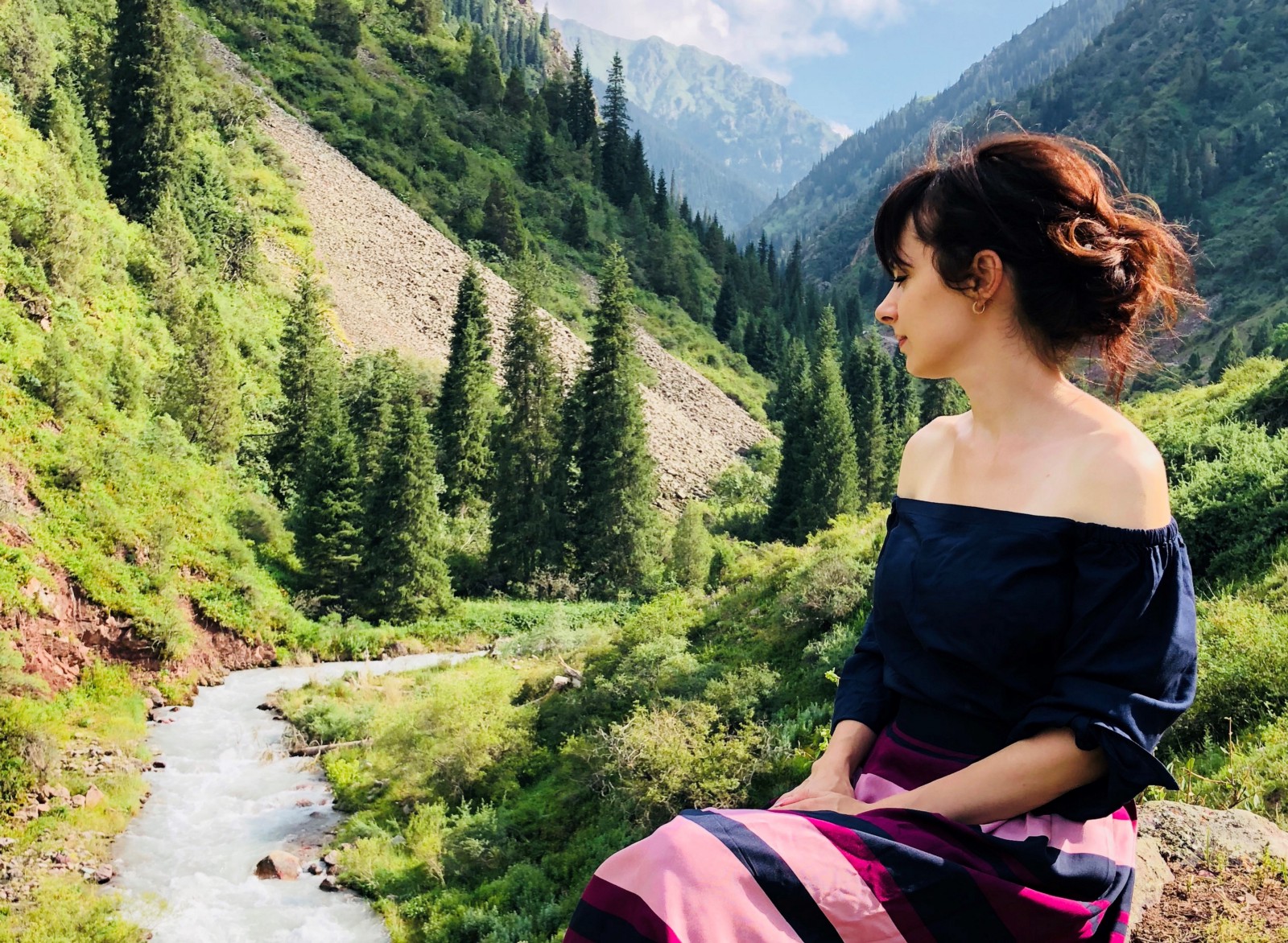
The Things Fire Could Not Take

Let me strip life of all that’s unimportant and tell you what’s left

Olya Aman

I am naturally taciturn. After the tragic death of my father, it was easier to get a full version of a Bollywood movie out of my expressive face than speech out of my lips. This peculiar characteristic of mine stays true to me till this day.

Simple life firmly impresses true values upon your memory

My family lived in one of four identical solid wood houses built close to each other for collective farm workers, near a wheat field about a mile from the rest of the villagers. Beautiful flower beds in front of it and a neat looking vegetable garden behind it were the objects of envy and admiration of all the women of the neighborhood. My mother said that it was from her that the village ladies learned to hang linen the ‘right’ way, placing it on a rope grouped by size and color.

Delicious memories of my childhood were made not from the riches but from unconditional love and care of my dear parents. My light heart and bright visions thrived in an atmosphere of slight monetary tightness because the right people were beside me. My mother and father found each other at the humble beginnings of their lives, and their union gave us the brightest bliss that would last a lifetime.

My family was an example of true devotion and love that does not consider poverty a misfortune, but rather a way to be inventive. My father made the best toys out of anything that he could find close to his skilled hands: a piece of wood, a branch from a tree, or a chunk of plastic someone tossed away.

The list can be endless. He made a wooden doll for my sister and presented it dressed in the cutest outfit my mom made from various pieces of cloth. I still have that doll, the dress she wears now is knitted by my crafty hand and the ugly-looking shoes and hat are the results of my niece’s experimentations with threat and a hook.

The whisper of beauty beyond the tomb

My father was a forester, an occupation that barely provided for our family but which he would never change for a more highly paid job, like a combine or a tractor driver. He was on duty going around the encampment spots and making sure no one was abusing the unfortunate forest for its wood, when the sound of a fire alarm brought him home.

The unusually hot summer weather in July 1993 endangered not only forests but all the grass fields of the area. The windy weather made the progress of the wildfire rapid and valiant. The woman and the infant, our next-door neighbors, were sound asleep and hopefully never sensed the pain of a horrible death.

My father entered the house in an attempt to save the mother with her baby. He perished with them.

The memorial service for the three victims of the fire was performed on the same day. My mother became a frequent visitor to the village church and talked a lot with our priest after every Sunday mass.

The priest told her:

“Those who have lived but are no longer with us implore us to step on a road of recovery. You need to continue living under the united care of the love remembered and the love still felt. The marks of grief and regret awaken the health-diminishing powers within. You need to learn contentedness again, even if more from good-mother-nature than from people.”

Father Peter was not only the old and wise priest of our ancient church, but the best friend of my father. Maybe that is why his following words helped my mother to find the strength within to live and to love:

“Material advantages of fortune are lost amid the true treasures of sincere affection. Loving people can lend fresh vigor to your life. The luster of the loving eyes, the brightness of the sincere smile, the beaming of the compassionate soul whisper of beauty beyond the tomb.”

My father’s last words are imprinted in my memory

“Now it is a custom to be fenced from the plants by stone walls as if we have nothing in common with them. It is not enough to simply plant a flower in your house — in this case, it will feel itself a prisoner. It needs to be precisely invited.”

I believe those were the last words my father said to me. He found me struggling with some kind of weed looking plant and sat on bare soil beside. It was so awesome to see him sitting on plane earth. I mean, it was normal for a kid to ignore the caution from adults to put something under your little butt, but for my wise father to do so seemed the coolest thing for a 5-year-old me.

My father was a person who had the vastness of nature to lose himself in. He had internal respect for all the living. He transferred this value to me on the day he said those words. With each passing year, I grow more familiar and confidential with the surrounding scenery. This intimate connection helps me cope with many life trials that are tossed on me. Every time I call up before my mind’s eyes the greenery and fragrance of the fields, mountains, and forests, I lift a dusky curtain of grief inch by inch and recover my balance.


Losing my father stripped life from everything unimportant. Let me tell you what’s left.

My life holds onto family values and support from caring people.

As confused as our existence can be sometimes, only family gives us the heart to cope with all difficulties. I’ve learned to value the power of it. Our devotion and love are gaining in strength with passing time and experienced together challenges. There is no one in this world so close and dear for me as my mother and sister, my husband, and kids. Nothing can disturb the equanimity of my mind because I have the support of loving people.

I welcome love and compassion and let these feelings do their healing deed. Kind communication can always draw a smile from me in the gloomiest time of my life. My family and close friends help me recover my will-power. To be with loving people has something of the divine in it.

The Boy Who Believed a Fortune Teller

Telling lies is a wicked habit. Once mastering this vice, you stop to be sincere even to yourself – Olya Aman

D. used to be a cheerful boy who was rushing into childish sorrow and joy, both with the same zeal. He got strongly carried away and stoically endured failures. He got sick with many childhood illnesses in succession: broke his arm in a skating rink, fell through the frail April ice one time, and once almost died from anaphylactic shock. No one was truly worried about him or tried to protect him because the safety margin he possessed was truly inhumane. It was very likely the result of love everybody bestowed on him which was accumulated over his childhood.

Kids can be cruel in their antipathy as much as they can be passionate about friendship. D. didn’t know the taste of opposition, as we all do now and then. He seemed to be an exception – a pet to every girl, a confidante to every boy, and a favorite to every adult. Plump and rosy-cheeked as a baby, he was skinny and pale when a toddler and a teen. Always cheerful but never laughing out loud, he appeared to always know how to behave and what to say to a party of elderly people or a group of children of any age.

D’s family lived in a three-story apartment building across the road from me. His balcony located on the first floor faced the front gate of our house and I used to observe him through our sun room’s picture window watering the flowers or playing with his cat. We used to exchange our own silent language and meet on a neutral territory just outside the entrance to his stairwell. Gathering the rest of our kids’ company we played picture cards or staged some play or other for grownups from the area. We drafted specific invitations as our performances were popular and we liked the idea of choosing the audience. 

D. was a source of endless ideas for costumes or the dialogue’s comical language. His sense of humor was superb, and laughter accompanied every act. I thought he would make a lead actor or a director in the theater world or even the cinema. His ability to change the timbre and depth of his voice, coming now from the upper part of vocal cords and then from his chest, fascinated me. D. used to easily memorize all parts and could improvise, always saving the scene when someone forgot their lines by mumbling the words of an unfortunate fellow in a funny sort of way, slightly opening a corner of his mouth and making the rest of his facial features unusually steady.

We all used to think his never-ending source of energy and ideas would be like an immortal all- present sun, that only in cloudy weather could not be seen, but everybody knew still existed in our sky. When he got sick, no one paid attention to this fact and considered any misfortune in his path as a slightly darkened forecast for the day: we might not see him today, but tomorrow the sun will rise again as it always did before. And true to this expectation, he woke up the next morning and went out to the balcony with his hand bandaged or his head wrapped. We loved him at those moments more than anyone. It seemed the memory of yesterday without his joyful spirit was sunless. 

But one thing finally broke that love-shielding wall that I’m sure protected him, and that jolly spirit perished with it. On one occasion coming home from school D. was stopped by a gypsy woman and driven by curiosity he let her take his hand. She predicted his death from a fall. Yes. So silly: no particulars of any sort, just a silly woman saying a silly thing out of spite just to scare a boy out of his wits. But his passionate nature disserved him this time and he was carried away by that nonsense. The look in his eyes changed gradually: happy sprinkles of yellow on a watery green iris gave way to gloomy brown ripples almost swallowing the rest of the palette of his eye. His countenance, full of lifeblood, had undergone the transformation into a shadow-like version of himself. His paleness was not noble anymore. Rather it was unwell, and his tiny frame gave the impression of some disposition or other.

From that time every disease he suffered from drained the life out of him drop by drop. There was a sickening flavor about him that made one think of misfortunes, bad luck, and weakness. That unfortunate prophecy stole the charisma that D. undoubtedly possessed and the admiration we all felt towards him yielded to the force of death that obsessed his mind and changed his looks drastically to the worse.

He constantly repeated that crazy woman’s words, which resulted in an alien personality he started to wear, thinking somebody else’s thoughts about his life in constant fear of a fall. He came to be one of those unfortunate people that always look back on others with dread, nervously trying to read everybody’s thoughts, expecting them to pity him and disliking them for that. He desperately needed someone else’s sympathy, approval, and love. He had all of it in abundance when he was able to give his cheerful smile in return. When a gloomy mood possessed him, any positive feedback from outside was forever lost.

At the age of 14 D. withered as a flower pulled from its soil. It was a minor cold that killed him afterward. Many think though, that he was dead long before that illness took his final breath. Dread of everything that life is – trials and failures, meetings and partings, praise and hearsay – was a murderous weapon that made the final shot. The memory of his awe-inspiring cheerful nature that reserved everybody’s favorable attitude towards him was a red cloth that made him furious when he saw the change in people that truly was only his own nervy and stressful alteration, reflection of which he saw in others.


Even now, when I think of D., I don’t remember the prophecy first. I remember the boy who believed he could survive anything. Sometimes I wonder whether fear can become so convincing that it slowly rewrites a person’s life. I have never forgotten him, or the lesson that careless words can take root in a child’s heart.

A Beast Bit My Face and Changed Me For the Better

My face is different. But ‘different’ doesn’t always mean ‘worse’

Olya Aman

I was shocked and, due to that, felt no pain at first. People were shouting and gesturing to one another, trying to figure out how to distract the furious beast. Somehow, I do not recollect exactly how it was pulled from me. The man who helped me in an old blue ‘Zhiguli’ and drove to the village dispensary and later to the nearest town hospital was the owner of the dog. In the hospital, I got nine stitches in four places on my face.

The doctor that performed the work of reconstructing my face did not know about cosmetic stitching. He simply decided the way he would do it was going to be sufficient. During the procedure, I concentrated on his deep, fine-tuned voice. To listen to him was like drinking warm ginger tea on a frosty winter day, and very likely it served as the best anesthetic for me. His work was not bad, just not good.

I have the scars, one is very visible, and people often ask about it. I consider it a part of my unique personality. I like my face. I love myself the way God created me and the way life, not always gentle, adjusted the sacred work.

Thoughts about my mother, her loving face darkened by suffering because of the incident, overpowered the fear of thread, needle, and pain. And even during the recovery, when the only recollection of the event made me shake with uncontrollable sobbing — the result of a great fright — I tried to compose myself with enormous energy. One glance at my mother’s eyes with a distinct element of worry pulled me together, and I did my best to laugh.


Providence is often a cruel teacher. The life-threatening experience I went through was there to spirit me for what was before to come. I had bad days, but not too many. I had loss enough, but not too much. Although, I feel completely miserable at times, I do my best to not feel depressed, rather unite the best blessings of my nature and learn to be a gainer in every situation.

I didn’t react to those unfortunate circumstances with deliberate self-pity. I thought of my mother and not of myself. From then on, my desire to give overpowers the desire to take. Lack of selfishness gives me the strength to withstand many of life’s calamities.

Whatever happens, I only need to understand how things are and accept the change, because ‘different’ doesn’t always mean ‘worse’.

Become a Sweet Killer Each Time You Converse With a Person

Find charming weapons in your posture, gestures, and mimic

You must possess a great deal of inner strength to fight for your true essence. – Olya Aman

Experienced the poison of my own personality reflected and redirected at me when I was eight.

We were sitting on a balcony on the 6th floor of a nine-story quiet building and shelling peas when the boy, my distant cousin, the exact relation of whom I am not able to disclose, promised to marry me once we grew up. He was 6 years old, I think, and for me, that was the main obstacle to matrimony. I couldn’t bear my husband being a whole 2 years younger than me.

The boy was petite and skinny, dressed according to the latest style with a modern haircut. His eyes were flickering like quiet water at the bottom of the well. I don’t remember his name, only the electrified tenderness from the combination of sounds that caressed the roof of my mouth.

I used to be a shy girl and I couldn’t imagine anybody might take a liking to me. This first occasion indulged my vanity and coupled with that raised right eyebrow and light tilt of the head to the left made magic. He unconsciously copied all my gestures, like the one of bringing the tips of my fingers together in a thoughtful manner.

That skill of sweet murderous attraction (and my distant cousin undoubtedly possessed it) sometimes takes ages to master. By listening with all six senses, adding full awareness to this mutual process of comprehension, and giving yourself in full to the moment of wisdom, you may be highly rewarded by obtaining a grateful and affectionate friend.

Unfortunately, the relation, if any, was very distant and I haven’t seen my first admirer for many years. Our encounter lasted about 4 hours and was limited by that romantic adventure with peas.

However, the ability to see, or rather to sense with your entire body the inner rhythm of any living being could be a curse rather than a blessing.

One day about six years ago when I visited M. I met a good-looking man. What struck me was the familiar flickering in his eyes. “I’ve already seen that watery gray color somewhere”, I thought.

His wife was a big woman with unusually dainty ankles. She had a style about her, and I could almost call her dazzling but for her loud voice, just a touch above average, with an expression of power and force in it.

Magnetism seemed to radiate from her, and it outshone her husband completely. They both made a curious movement of their shoulders when being introduced to me. At the dinner table she talked a lot and each time her husband wanted to add something, she interrupted him deprecatingly. It looked like she didn’t care even two straws about him when he was completely determined to obey her in every way.

This man was lost in his wife’s charisma, modeling her movements and intonations in vain hope to be heard by the object of his admiration. It can be easier for a person like that to vanish in search of identity and never discover the true self within.

Looking back, I sometimes think individuality is far more fragile than we imagine. It does not disappear all at once. It fades quietly, gesture after gesture, borrowed opinion after borrowed opinion, until one day we hear ourselves speaking with someone else’s voice and wonder where our own has gone.

The little boy I once knew copied my movements because he was discovering the world. The man I met years later copied his wife’s because he seemed to have stopped discovering himself.

Perhaps the greatest struggle in life is not becoming someone extraordinary.

It is remaining yourself while loving someone else.

You must possess a great deal of inner strength to fight for your true essence.