
Tag Archives: #appreciation

The Boy Who Believed a Fortune Teller

Telling lies is a wicked habit. Once mastering this vice, you stop to be sincere even to yourself – Olya Aman

D. used to be a cheerful boy who was rushing into childish sorrow and joy, both with the same zeal. He got strongly carried away and stoically endured failures. He got sick with many childhood illnesses in succession: broke his arm in a skating rink, fell through the frail April ice one time, and once almost died from anaphylactic shock. No one was truly worried about him or tried to protect him because the safety margin he possessed was truly inhumane. It was very likely the result of love everybody bestowed on him which was accumulated over his childhood.

Kids can be cruel in their antipathy as much as they can be passionate about friendship. D. didn’t know the taste of opposition, as we all do now and then. He seemed to be an exception – a pet to every girl, a confidante to every boy, and a favorite to every adult. Plump and rosy-cheeked as a baby, he was skinny and pale when a toddler and a teen. Always cheerful but never laughing out loud, he appeared to always know how to behave and what to say to a party of elderly people or a group of children of any age.

D’s family lived in a three-story apartment building across the road from me. His balcony located on the first floor faced the front gate of our house and I used to observe him through our sun room’s picture window watering the flowers or playing with his cat. We used to exchange our own silent language and meet on a neutral territory just outside the entrance to his stairwell. Gathering the rest of our kids’ company we played picture cards or staged some play or other for grownups from the area. We drafted specific invitations as our performances were popular and we liked the idea of choosing the audience. 

D. was a source of endless ideas for costumes or the dialogue’s comical language. His sense of humor was superb, and laughter accompanied every act. I thought he would make a lead actor or a director in the theater world or even the cinema. His ability to change the timbre and depth of his voice, coming now from the upper part of vocal cords and then from his chest, fascinated me. D. used to easily memorize all parts and could improvise, always saving the scene when someone forgot their lines by mumbling the words of an unfortunate fellow in a funny sort of way, slightly opening a corner of his mouth and making the rest of his facial features unusually steady.

We all used to think his never-ending source of energy and ideas would be like an immortal all- present sun, that only in cloudy weather could not be seen, but everybody knew still existed in our sky. When he got sick, no one paid attention to this fact and considered any misfortune in his path as a slightly darkened forecast for the day: we might not see him today, but tomorrow the sun will rise again as it always did before. And true to this expectation, he woke up the next morning and went out to the balcony with his hand bandaged or his head wrapped. We loved him at those moments more than anyone. It seemed the memory of yesterday without his joyful spirit was sunless. 

But one thing finally broke that love-shielding wall that I’m sure protected him, and that jolly spirit perished with it. On one occasion coming home from school D. was stopped by a gypsy woman and driven by curiosity he let her take his hand. She predicted his death from a fall. Yes. So silly: no particulars of any sort, just a silly woman saying a silly thing out of spite just to scare a boy out of his wits. But his passionate nature disserved him this time and he was carried away by that nonsense. The look in his eyes changed gradually: happy sprinkles of yellow on a watery green iris gave way to gloomy brown ripples almost swallowing the rest of the palette of his eye. His countenance, full of lifeblood, had undergone the transformation into a shadow-like version of himself. His paleness was not noble anymore. Rather it was unwell, and his tiny frame gave the impression of some disposition or other.

From that time every disease he suffered from drained the life out of him drop by drop. There was a sickening flavor about him that made one think of misfortunes, bad luck, and weakness. That unfortunate prophecy stole the charisma that D. undoubtedly possessed and the admiration we all felt towards him yielded to the force of death that obsessed his mind and changed his looks drastically to the worse.

He constantly repeated that crazy woman’s words, which resulted in an alien personality he started to wear, thinking somebody else’s thoughts about his life in constant fear of a fall. He came to be one of those unfortunate people that always look back on others with dread, nervously trying to read everybody’s thoughts, expecting them to pity him and disliking them for that. He desperately needed someone else’s sympathy, approval, and love. He had all of it in abundance when he was able to give his cheerful smile in return. When a gloomy mood possessed him, any positive feedback from outside was forever lost.

At the age of 14 D. withered as a flower pulled from its soil. It was a minor cold that killed him afterward. Many think though, that he was dead long before that illness took his final breath. Dread of everything that life is – trials and failures, meetings and partings, praise and hearsay – was a murderous weapon that made the final shot. The memory of his awe-inspiring cheerful nature that reserved everybody’s favorable attitude towards him was a red cloth that made him furious when he saw the change in people that truly was only his own nervy and stressful alteration, reflection of which he saw in others.


Even now, when I think of D., I don’t remember the prophecy first. I remember the boy who believed he could survive anything. Sometimes I wonder whether fear can become so convincing that it slowly rewrites a person’s life. I have never forgotten him, or the lesson that careless words can take root in a child’s heart.
She Survived Genocide and Returned Home to Heal Others

I act often with fear and bravery chasing each other in my eyes… – Olya Aman

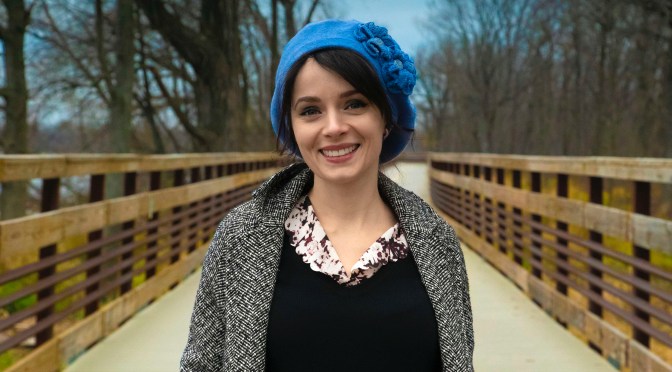
L. is a good nurse, and that alone tells a lot about her. She was born in Rwanda, adopted and raised in Europe. L. moved back to Rwanda when she learned her way and made sure that helping her patients was her aim in life. After the genocide her native country needed support, her least lucky people needed her knowledge.

L. is a fine creature, her big almost black identical in size and shape eyes cause people to confide in her. She learned early on to listen, and this skill proved to be invaluable in her profession.

“Every day is like putting Humpty Dumpty back together again,” she says. “I begin my harum-scarum day and see the transformation, one person at a time.”

“I was 12 when my new parents took me to Europe. I have my first memories linked with horror and fear, loss and grief. Those memories shaped my personality and in some way, I am grateful for the background I have.

“My good, generous and loving parents had to put up with a lot. I was not an obedient child, rebelling at anything and everything. I was in constant emotional pain at least first five-six years or so. The lesson of the genocide period in Rwanda left my whole being in ruins. Nearly one million people were killed. I lost my family, my friends, everything I ever loved.”

“Love and patience helped me to gradually come back to believing again. Jane and Matt—my stepparents—are my rocks in life. I owe them my new self, or, rather, the return of my old happy before-the-horror-self. I remember and I mourn, I often cry, but now mostly because of happy memories.”

“This transformation came with the knowledge that I wanted to make a change. A woman that nursed me in the hospital imprinted the longing for the same profession in me. By that time I knew that Rwanda was in the reconstruction period and the system of health needed human resources. I was going to come back home.”

“The most precious resource of the post-genocide Rwanda was its people. Thousands of community health workers traveled from home to home providing the necessary care. I willingly joined the rural health tribe.”

“The health workers were selected by the villages they served. The people of my native village decided that I would care for them. It was the happiest day of my life.”

“At the end of every day, I am tired and full of joy and sorrow. Both mixed together comprise my life and make it unforgettable. I take both and grateful for both. The new coming day is ever more incredible because of this mixture of emotions and I always start it on a positive foot.”

“I am happy to be home. To lead the life of purpose is stimulating. I often in a state of inward merriment and I encourage myself to prolong this feeling because it is contagious. People around me can feel it and, consequently, become happier from my presence in their life.”

L. is very contented in her profession. She is a link in a chain of remarkable alterations for the better.

L. confided in me and gave her permission to share her story. She only asked to make an emphasis on the happy side of it, showing to my readers the importance of positive, grateful approach to life. She mentioned several times that love saved her sanity, and optimism of her parents, being contagious, helped her to get better physically and emotionally.

Beyond the Reach of Pain

I was armed at all points. It was a pleasure to be so completely equipped for the life battle with my gratitude weapons being polished steel. — Olya Aman

T. was a generous spirit. He had all the illumination of wisdom, and yet he was distressfully dying. I was touched with wonder at the depths of perception of which this person was capable. His unselfish belief in the idea that gratitude is a way to make the most of life was something I could set up, and bow down before, and offer a sacrifice to.

T. had a taint of death, a flavor of mortality in him—which is exactly what I needed to shake my world to the bottom. I hung on every syllable he uttered in his diary, and received, as oracles, all he wrote.

“Of parents extremely poor and extremely honest, it was next to impossible that I could paint my life other than in grateful colors. Our family seemed to be possessed with a kind of intellectual gaiety at the times of the most troublesome hardships. We were able to starve any thoughts of misery and lack of appreciation entirely away by just a mere force of heartfelt love to each other and to the life itself.”

“I often was bruised and felt scant of breath but never ungrateful. Every misfortune walked me away from despair and gave me the key to patience. I was a sick-nurse to my father. I was seriously out of health.”

“I had good winters and poor winters. I basked in the sun and went to bed when it rained. And I never forgot to spend a few moments a day reflecting on the things in my life I was blessed with.”

“I was determined to live longer, although the doctors professed the limit till just two-and-thirty. Imputing it to nothing but grateful feelings, which for ought I knew, prolonged my life extremely, I was able to make it to these days, waaay past forty.”

“When I was in pain I more often smiled than scowled. That was the foundation of my beauty despite of my many limitations. Had I lived my life again in every detail of desire, temptation, pain and surrender, I would have chosen the exact life I lived to the very aspect of sickness and every element of loss.”

“Gratitude gave me that easy confidence of manner. Always quite up to everything, I was a sort of person you could depend on, and that made me splendidly respectable by my partners and coworkers.”

“I took no notice of negative people and very little of pessimistic acquaintances. The wealth of positive emotion awakened pleasure and added loveliness and virtue to my life.”

“The fervency of my personality trembled from sunlight and fragrance. Gratitude created a barrier that was guarding me against cold and cheerless.”

“I looked on nature and my fellow-men and didn’t see the dark and gloomy. The cheerful colors prevailed, and those were reflections from my own grateful eyes.”

T. died at forty-eight. When I saw him last, he evidently found great difficulty speaking. He waited long to collect himself, and then he murmured simply: “Take this,” and he handed me his diary. That book had a voice that dropped deep into my soul.

The last page contained a message:

“Pain passes, but love remains. We suffer so much sometimes. I’m very old when I think about it, but I grow young again when I believe in generous mistakes that hurt, happy tears that burn, and deep adoration that squeezes the heart till every drop of love is revealed. And the only way to see the beauty in life is to be able to open your eyes every morning with extraordinary grateful gladness. Only this feeling will make you beyond the reach of pain.”